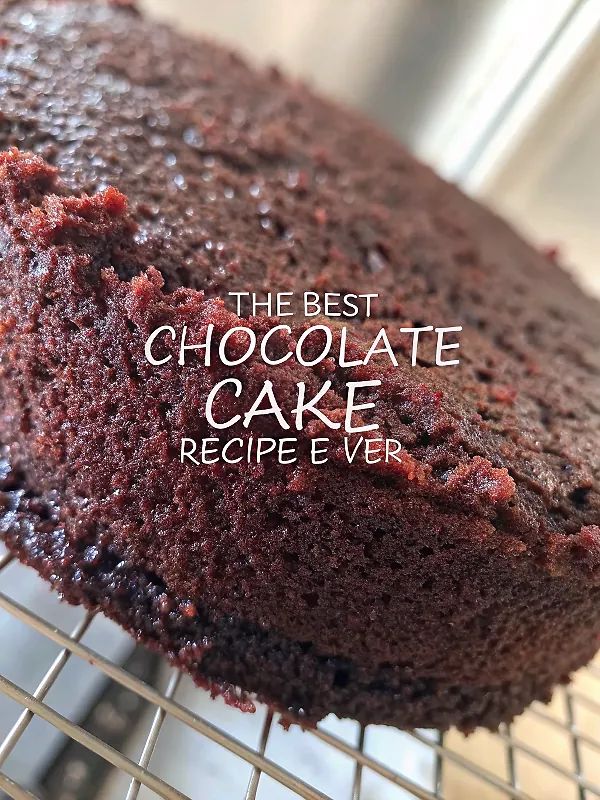
Unlocking the Secret to The Best Chocolate Cake Recipe Ever
Have you ever yearned for a chocolate cake that truly lives up to its name – one that's not just "good," but utterly unforgettable? The quest for the perfect chocolate cake often ends in disappointment: a dry, crumbly texture, or a chocolate flavor that's surprisingly bland. Many home bakers, despite their best efforts, struggle to achieve that coveted balance of incredible moisture, rich depth, and a tender crumb that melts in your mouth. But what if we told you there's a simple, scientific secret that transforms a good chocolate cake into
The Ultimate Chocolate Cake: Moist, Flavorful, & Foolproof Guide, consistently delivering bakery-quality results right in your own kitchen?
The answer lies in two deceptively simple yet powerful ingredients: boiling water and espresso powder. These aren't just additions; they're game-changers that elevate an ordinary chocolate cake to the realm of extraordinary. Forget everything you thought you knew about baking the perfect chocolate dessert; this guide will reveal why these two elements are the true cornerstone of **the best chocolate cake recipe ever**.
Why Most Chocolate Cakes Fall Flat (and How We Fix It)
Before we dive into our secret weapons, let's understand the common pitfalls that plague many chocolate cake recipes. The primary culprits behind a disappointing chocolate cake are usually:
* **Lack of Moisture:** This is perhaps the most common complaint. Cakes can dry out easily, especially when overbaked or if the fat and liquid ratios are off.
* **Insufficient Chocolate Flavor:** Many recipes promise rich chocolate but deliver a muted taste. This can be due to the type or amount of cocoa powder used, or a lack of flavor enhancers.
* **Dense or Crumbly Texture:** Cakes can become heavy and dense if the batter is overmixed, or crumbly if the gluten structure isn't properly developed and hydrated.
* **Poor Rise:** Flat cakes are often a sign of inactive leavening agents or incorrect ingredient ratios that don't allow for adequate lift.
Our approach directly addresses these issues, ensuring that with every bite, you experience unparalleled moistness, intense chocolate flavor, and a beautifully tender, fine crumb.
The Game-Changer: Boiling Water & Espresso – The True Secret to The Best Chocolate Cake Recipe Ever
This isn't just another claim; it's a method backed by baking science that yields consistently superior results. The strategic inclusion of boiling water and espresso powder is what truly sets this recipe apart, making it arguably **the best chocolate cake recipe ever**.
The Magic of Boiling Water
Boiling water might seem like an unusual addition to cake batter, but it performs several critical functions that are essential for a truly exceptional chocolate cake:
1. **Blooms the Cocoa Powder:** This is perhaps its most crucial role. Cocoa powder, especially natural cocoa, contains tiny particles of starch and flavor compounds. When boiling water is added, it *blooms* these particles, much like heating spices in oil intensifies their flavor. The hot water causes the cocoa particles to release their full spectrum of chocolate flavor, deepening and enriching the taste profile of the entire cake. Without this step, your chocolate flavor will be noticeably less intense.
2. **Creates an Incredibly Moist Crumb:** The boiling water contributes a significant amount of liquid to the batter without adding extra fat. This high liquid content, when combined with the cocoa, helps to create a very tender, moist crumb structure. As the cake bakes, this moisture helps to prevent dryness, ensuring that your cake remains wonderfully soft and damp, even days later. This is often the critical difference
that solves dry bakes.
3. **Aids in Leavening:** In recipes using natural cocoa powder (which is acidic), the boiling water helps to activate the baking soda more rapidly, contributing to a better rise and a lighter texture.
The Unsung Hero: Espresso Powder
Espresso powder is a secret weapon often employed by professional bakers, and for good reason. Its role is often misunderstood:
* **Intensifies Chocolate Flavor (Without Coffee Taste):** This is key. Espresso powder doesn't make your cake taste like coffee. Instead, its bitter notes act as a brilliant flavor enhancer, much like salt in savory dishes. It deepens and amplifies the inherent chocolate flavor, making it taste "more chocolatey" and rich, without introducing any noticeable coffee undertones. For those who are sensitive, a high-quality instant coffee can also serve a similar purpose.
* **Adds Depth and Complexity:** Beyond simple intensification, espresso powder adds a subtle layer of complexity to the chocolate, preventing it from tasting one-dimensional. It brings out the nuances of the cocoa, creating a more sophisticated flavor profile.
By combining these two powerful ingredients, you're not just baking a cake; you're orchestrating a chemical symphony that results in a profound chocolate experience.
Essential Ingredients for Unbeatable Flavor & Texture
While boiling water and espresso powder are the stars, the supporting cast of ingredients also plays a vital role in crafting **the best chocolate cake recipe ever**. Understanding each one’s contribution allows for perfect execution and thoughtful substitutions.
- All-Purpose Flour (2 cups / 240g): This forms the foundational structure of your cake. For an even more tender crumb, consider substituting with cake flour.
- Granulated Sugar (2 cups / 396g): Provides essential sweetness and contributes significantly to moisture retention. For a deeper, more nuanced flavor, a portion of the granulated sugar can be swapped for brown sugar.
- Unsweetened Cocoa Powder (3/4 cup / 63g): This is the heart of your chocolate flavor.
- Natural cocoa powder (like Hershey's or Ghirardelli) is acidic and reacts with baking soda to provide lift. It offers a strong, slightly fruity chocolate flavor.
- Dutch-processed cocoa powder has been treated to neutralize its acidity, resulting in a darker color and a milder, less bitter chocolate flavor. If using Dutch-processed, ensure your recipe also accounts for enough baking powder, as baking soda's leavening power is diminished without acid.
- Baking Powder (2 teaspoons / 8g) & Baking Soda (1 1/2 teaspoons / 9g): These leavening agents work in harmony. Baking powder provides initial lift, while baking soda reacts with acidic ingredients (like cocoa powder and milk/buttermilk) to create additional carbon dioxide, ensuring a light, airy texture and optimal rise. Always check the freshness of your leavening agents; expired products are a common cause of dense cakes.
- Kosher Salt (1 teaspoon / 2.8g): Don't skip the salt! It balances the sweetness and enhances all the other flavors, particularly the chocolate. Fine sea salt is an excellent substitute.
- Milk (1 cup / 227g): Adds crucial moisture and helps activate the leavening. Buttermilk provides extra tang and tenderness, while almond or coconut milk are great dairy-free alternatives.
- Vegetable Oil (1/2 cup / 99g): Oil contributes to a wonderfully moist cake, often more so than butter, as it stays liquid at room temperature. Canola oil or melted coconut oil are also excellent choices.
- Large Eggs (2, 100g): Provide structure, richness, and help bind the ingredients. Room temperature eggs emulsify better with other ingredients, resulting in a smoother batter.
- Vanilla Extract (2 teaspoons / 9.4g): A good quality pure vanilla extract adds depth, aroma, and rounds out the chocolate flavor beautifully.
Beyond the Batter: Expert Tips for Bakery-Quality Results
Achieving **the best chocolate cake recipe ever** isn't just about the ingredients; it's also about the technique. Here are a few professional tips to ensure your cake turns out perfectly every time:
- Room Temperature Ingredients: Ensure your eggs and milk are at room temperature. This allows them to emulsify more effectively with the fats, creating a smoother, more uniform batter and a finer crumb.
- Measure Accurately: Baking is a science. Using a kitchen scale to measure dry ingredients (like flour and sugar) is far more accurate than volumetric cups and will prevent common issues like dry or dense cakes.
- Don't Overmix: Once you add the dry ingredients to the wet, mix only until just combined. Overmixing develops the gluten in the flour too much, leading to a tough, chewy cake. A few small lumps are perfectly fine.
- Prepare Your Pans: Grease and flour your cake pans thoroughly, or line them with parchment paper, to prevent sticking. This ensures your beautiful cake releases easily and intact.
- Even Baking: If you're baking multiple layers, rotate the pans halfway through the baking time to ensure even heat distribution and uniform doneness. An oven thermometer can help verify your oven's actual temperature.
- Cool Completely: Allow cakes to cool in their pans for 10-15 minutes before inverting them onto a wire rack to cool completely. Attempting to frost a warm cake is a recipe for disaster, as the frosting will melt and slide off.
Conclusion
The journey to baking **the best chocolate cake recipe ever** doesn't have to be fraught with frustration. By understanding the transformative power of boiling water for blooming cocoa and enhancing moisture, and the flavor-amplifying magic of espresso powder, you're now equipped with the ultimate secret to chocolate cake perfection. Coupled with a thoughtful selection of high-quality ingredients and precise techniques, you can consistently achieve a cake that is deeply moist, intensely chocolatey, and boasts an exquisitely tender crumb. Prepare to impress everyone at your table and finally claim victory in your quest for the ultimate chocolate indulgence.